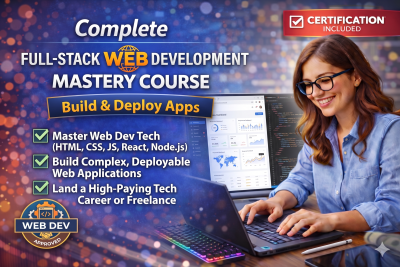
| Has discount |
 |
||
|---|---|---|---|
| Expiry period | Lifetime | ||
| Made in | English | ||
| Last updated at | Fri Jun 2026 | ||
| Level |
|
||
| Total lectures | 37 | ||
| Total quizzes | 6 | ||
| Total duration | 01:00:00 Hours | ||
| Total enrolment |
 0
0 |
||
| Number of reviews | 0 | ||
| Avg rating |
|
||
| Short description | |||
| Outcomes |
|
||
| Requirements |
|
https://proskillacademy.online is your one-stop online learning platform offering a wide range of skill-based courses designed to help you grow professionally and personally. Whether you're looking to master web development, digital marketing, graphic design, database management, or language skills, we’ve got you covered with expert-led, beginner-to-advanced level courses. Explore in-demand programs like WordPress, Shopify, Python, MERN Stack, JavaScript, CSS, UI/UX Design, MySQL, and more. Enhance your communication with our Spoken English, IELTS, French, and Spanish language classes. Supercharge your online presence with our practical Instagram, Facebook, and YouTube Marketing courses or enroll in our Complete Digital Marketing Course. Learn at your own pace, access high-quality video content, and gain real-world skills that matter. Join thousands of learners at BestStudyHub.com — where your success begins.